

Waste reduction is an action taken to reduce solid waste toxicity or disposal, including:
- Manufacturers’ redesign and management of products and packaging to extend product life, and facilitating repair
- Consumers’ reduced purchase and consumption of products that become wastes
- Manufacturers’ and consumers’ reuse of products.
Reuse includes the collection of used products for recycling or composting. Collecting, hauling, burying and maintaining wastes in landfills is expensive but essential for aesthetics and human health. Landfills are potentially harmful to the environment, and must be monitored for at least 30 years after closure. Despite limited reserves of food, an estimated 30 – 40% end up in the landfill. Last year, an estimated 23.5 million pounds of food and 20.5 million pounds of plastics was buried in the landfill. About 25% of landfill waste was likely paper and cardboard – resources with predicted steady demand in the recyclables market.

Waste Reduction Goal 1: Divert 10% of Waste by Weight from the Landfill by 2028
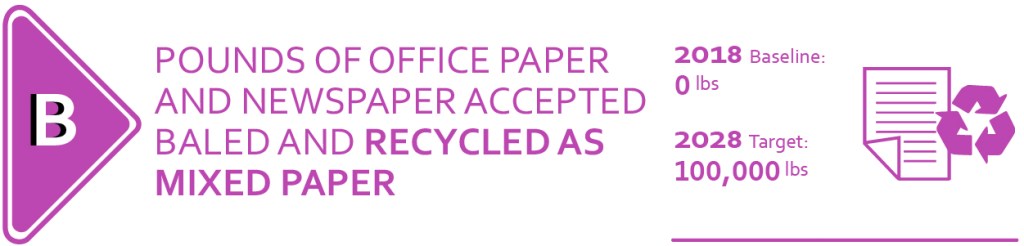
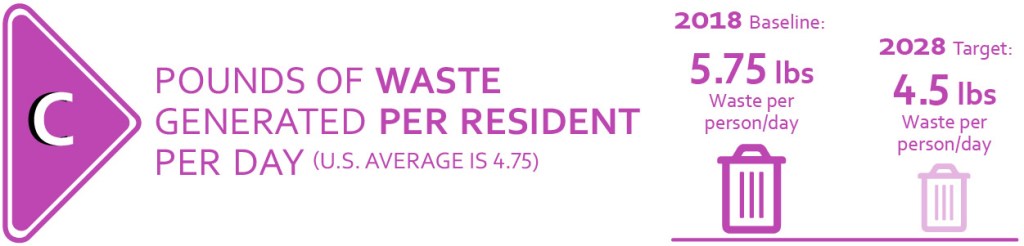
The Borough has been diverting waste from the landfill for several years. Because of the distance to market, volume generated, China’s waste import restrictions, and other factors, recycling is not currently profitable, but neither is burying waste. Nonetheless, recycling, like soccer fields, is a Borough service that residents clearly desire. Reducing consumption and waste, increasing recycling, and reusing products are all laudable goals. How much waste is being diverted from the landfill, how many pounds of paper recycled per year by the Central Recycling Facility (CRF), pounds of waste generated per resident per day, and the number of students participating in recycling education activities are very good indicators to track overall progress and revenue generation.


Food

Energy

Waste
 Sustainable Fairbanks